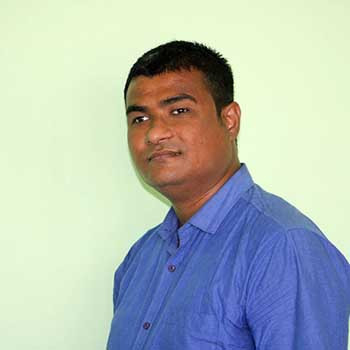
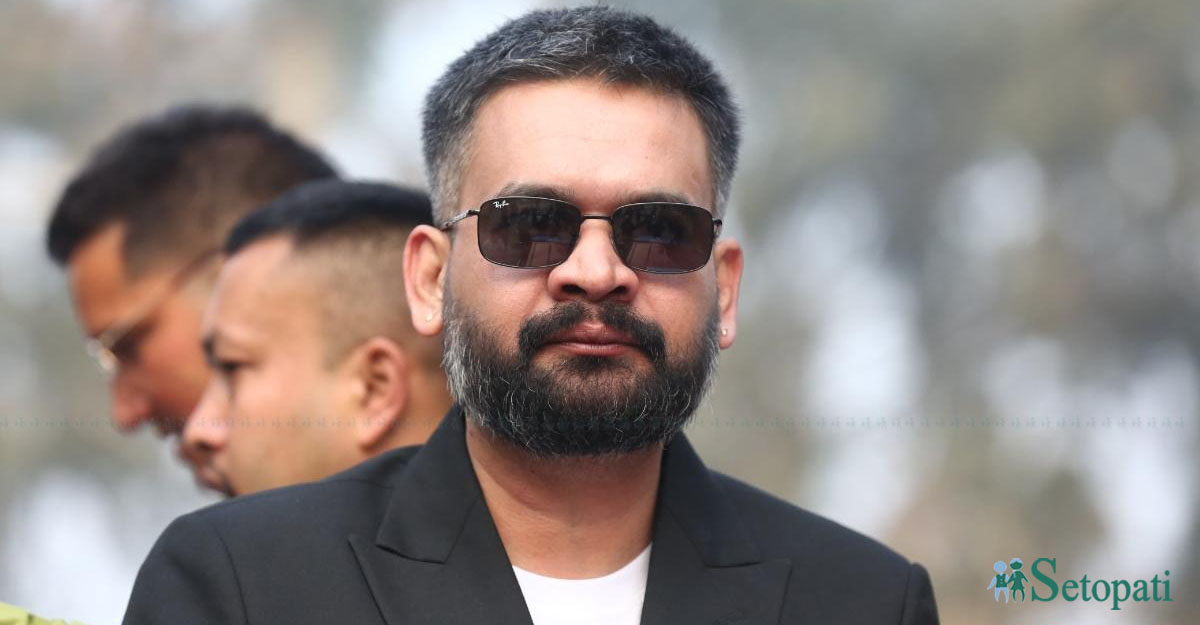
Senior leader of the Rastriya Swatantra Party (RSP), Balen Shah, has defeated CPN-UML Chairman KP Sharma Oli in Jhapa Constituency No. 5.
Shah secured 68,348 votes, while Oli received 18,734 votes, resulting in a huge margin between the two.
The number of votes received by Shah is the highest ever recorded in the history of parliamentary elections in Nepal.
This marks the second time Oli has been defeated in Jhapa. In the first Constituent Assembly election in 2008, he was defeated by Bishwadeep Lingden of the then CPN (Maoist). This time, he has been defeated by Shah of the RSP.
Oli, who was once confident that "even a shoe fielded by the UML would win the election" in his constituency, faced the toughest electoral test of his political career this time.
As a result of the pressure Oli and his party were experiencing in Jhapa-5, Oli, who had never done door-to-door campaigning before, went from neighborhood to neighborhood this time to listen to the grievances of voters. However, his Herculean effort ultimately failed.
In previous elections, Oli used to address rallies nationwide, but this time he remained more focused on his own constituency. Previously, he rarely engaged in direct conversation with voters, but this time he was seen attentively listening to the grievances of voters in his area.
"Something strange is happening this time," a UML worker from Jhapa-5 said before the election. "Lately, he has been going around listening to everyone's grievances. We had never seen him patiently listen to one person's concerns for half an hour."
This sudden change in Oli was largely compelled by circumstances. It was Shah who created immense pressure on Oli and the UML in this election.
After joining the RSP, Shah, the outgoing mayor of Kathmandu Metropolitan City, became not only a senior party leader but also its candidate for future prime minister. Shah, a popular rapper among young voters, posed a serious challenge to Oli by standing against him as a “future prime minister.”
Public statements made by Oli and other UML leaders clearly reflected the tension created by this contest.
In Jhapa-5, however, Oli and Shah were not the only candidates. Mandhara Chimariya of the Nepali Congress, Ranjit Tamang of the Nepali Communist Party, Samir Tamang of the Shram Sanskriti Party, and others were also in the race.
However, the election debate and discussion in Jhapa-5 largely revolved around Oli and Shah, both declared by their parties as future prime ministers. The question of "KP or Balen" dominated the discourse in the constituency, giving the impression that no one else was even in contention.
The Setopati team, after visiting all wards in Jhapa-5 and talking to voters before the election, had projected that Shah would win this election by a wide margin.
Oli had always appeared confident in his constituency. This time, however, that confidence was missing.
During the first Constituent Assembly election in 2008, the current Jhapa-5 constituency was then Jhapa-7. As the election campaign reached its peak, the UML organized a rally at Damak Chowk.
The main speaker at that rally was Oli, the UML candidate from the constituency. Oli flew from Kathmandu to Bhadrapur Airport and went straight to Damak to address the gathering.
Addressing a large crowd of UML workers and supporters, an enthusiastic Oli opened fire on the Nepali Congress in his trademark style. He even declared that the Maoists would not even be in contention.
At that very rally, he said in a confident voice: "Even if we fielded a shoe as the UML candidate in this constituency, we would win." The crowd endorsed Oli's statement with thunderous applause.
When the final results were announced, however, Oli lost the election. The Maoist candidate Bishwadeep Lingden, who Oli had said would not even be in the contest, emerged victorious.
At that time, Oli’s constituency wasn’t the only defeat faced by the UML in Jhapa, which the party used to claim as its stronghold. Except Jhapa-6, the UML lost in all constituencies of the district.
After losing the 2008 election, Oli returned to victory in the second Constituent Assembly election in 2013, when he attended only a few rallies in his constituency.
In 2017, despite forming a left alliance, Oli also built a three-party front by allocating Jhapa-3 to the Rastriya Prajatantra Party (RPP). He won that election easily.
In the 2022 election as well, Oli allied with the RPP and secured a comfortable victory against a five-party alliance that included the Nepali Congress and the Maoists. However, Oli addressed rallies of party workers organized in all municipalities of Jhapa-5 at that time.
In the run-up to this year’s election, Oli regularly met voters and listened to their concerns. Especially after being ousted from the prime minister’s office following the Gen Z movement, he had become politically defensive. Ironically, he has now been defeated by Shah, one of the figures that inspired the movement.
Oli had previously won elections in 1991 and 1994, and in 1999 he won from two constituencies in Jhapa.
This time, however, while Oli himself lost, his party has also suffered extremely poor results nationwide.
In the 1991 election, UML won 69 seats nationwide, including 30 out of 39 constituencies in districts that are currently in Koshi province.
So far in this election, Suhang Nembang in Ilam-2 is the only UML candidate leading in the province.
The party is set to lose all five constituencies in Jhapa.
Over the years, the UML’s strength in present-day Koshi has fluctuated – from 23 seats in 1994, to 17 seats in 1999, to 8 seats in the first Constituent Assembly election in 2008.
In the second Constituent Assembly election in 2013, the UML won 23 out of 44 seats in Koshi.
In 2017, the UML formed an alliance with the Maoists, winning 17 seats in the province under the first-past-the-post (FPTP) system. The Maoists secured five seats.
In 2022, the Nepali Congress, Maoist Center, and CPN (Unified Socialist) formed a five-party alliance. Despite that, the UML managed to win 13 of 28 constituencies in Koshi province under the FPTP system.
This time, however, not only has Oli lost his seat, but the UML is also facing weak results even in areas of the Koshi hills and plains once considered its strongholds.